
Category Guides
Landscape: A Category Guide
What separates a landscape that places in IPPAWARDS: layered depth, light that does something, and a committed decision about scale. The phone's widest lens is the easiest place to lose the frame.

Landscape is the category most entrants try first, and the one where a phone's widest lens does the most damage. A 24mm frame takes in everything, and everything is rarely the reason a photograph works. What gets through the shortlist is a picture that has decided what it is about: a ridge at a particular hour, one anchor in the foreground, a scale that means something.
The good news is that landscape is also the category where the gear argument ends fastest. In the 2026 results there are landscapes made on an iPhone 7 and on an iPhone 17 Pro Max, and the difference between the two devices is not the reason one placed and another did not.
What the category rewards
Three things recur in the award-winning landscapes in the archive. The first is layered depth: a foreground that holds the eye, a middle distance that explains the place, and a far element that gives it size. The second is a light event, a reason this frame exists at this minute rather than another. The third is a point of view: the picture takes a position on scale, on distance, or on how small the photographer is inside the scene.
Read the light before the location
Locations are searchable; light is not. Most landscapes are made in the forty minutes after sunrise or before sunset, and the frames that stand out are usually made when the weather is doing something no forecast promises: a cloud edge, a break in rain, dust, sea fog, a front passing through. Plan the location, then wait for the light, and accept that the plan will sometimes lose.
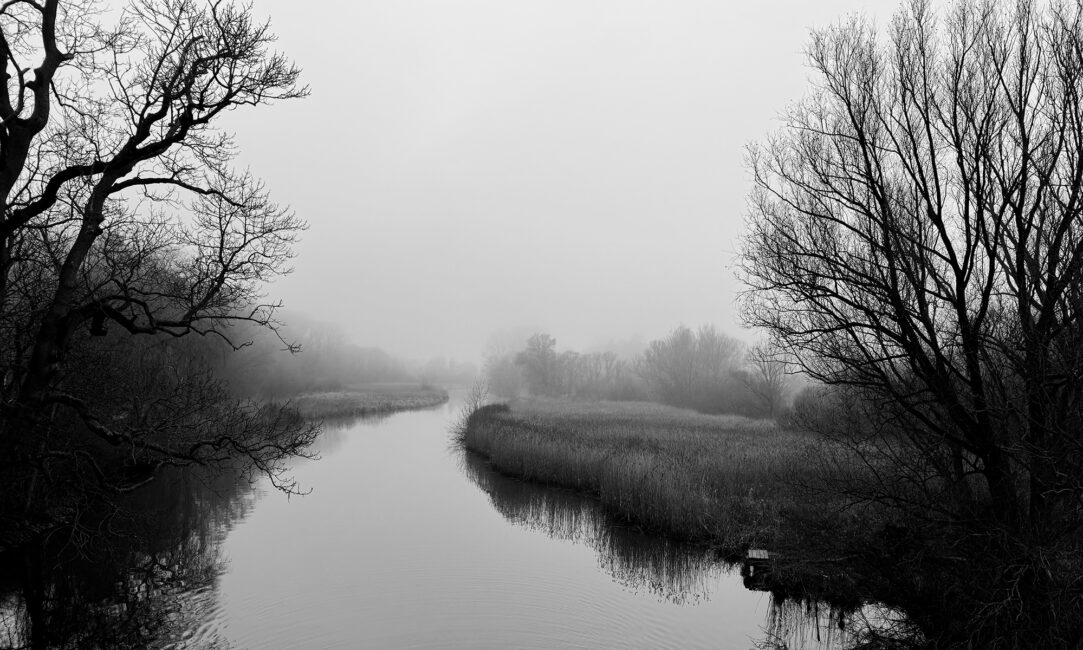
The other half of that lesson is proximity. Jens Petersen's Lübeck Amazonas, first place in 2025, was made on the Trave River in a northern German city, not in a rainforest. The title is a small joke about what a river bend can look like when the light and the framing cooperate. If you are waiting for a trip to Iceland before you enter, you are waiting to lose a year.
Build the frame in three depths
Before you raise the phone, name the three layers out loud: what is closest, what explains the place, and what gives it scale. If two of the three are missing, move. Walking fifty metres fixes a landscape faster than any edit. Get the phone low to give the foreground weight, and check the corners at 0.5x, where the wide lens bends anything vertical.
The horizon is the other decision people skip. Two-thirds sky makes the weather the subject; two-thirds ground makes the place the subject; dead centre usually makes neither, unless a reflection is doing the work. Pick one and commit to it.
Before you press the shutter
- Can you name the foreground, the middle and the distance?
- Is the horizon level, and is it where you want it?
- Is there a reason this frame exists at this minute?
- Are the corners clean at 0.5x?
- Have you tried the same frame at 2x or 3x?
- Would you hang it on a wall with nothing else in the room?
Focal length is the decision
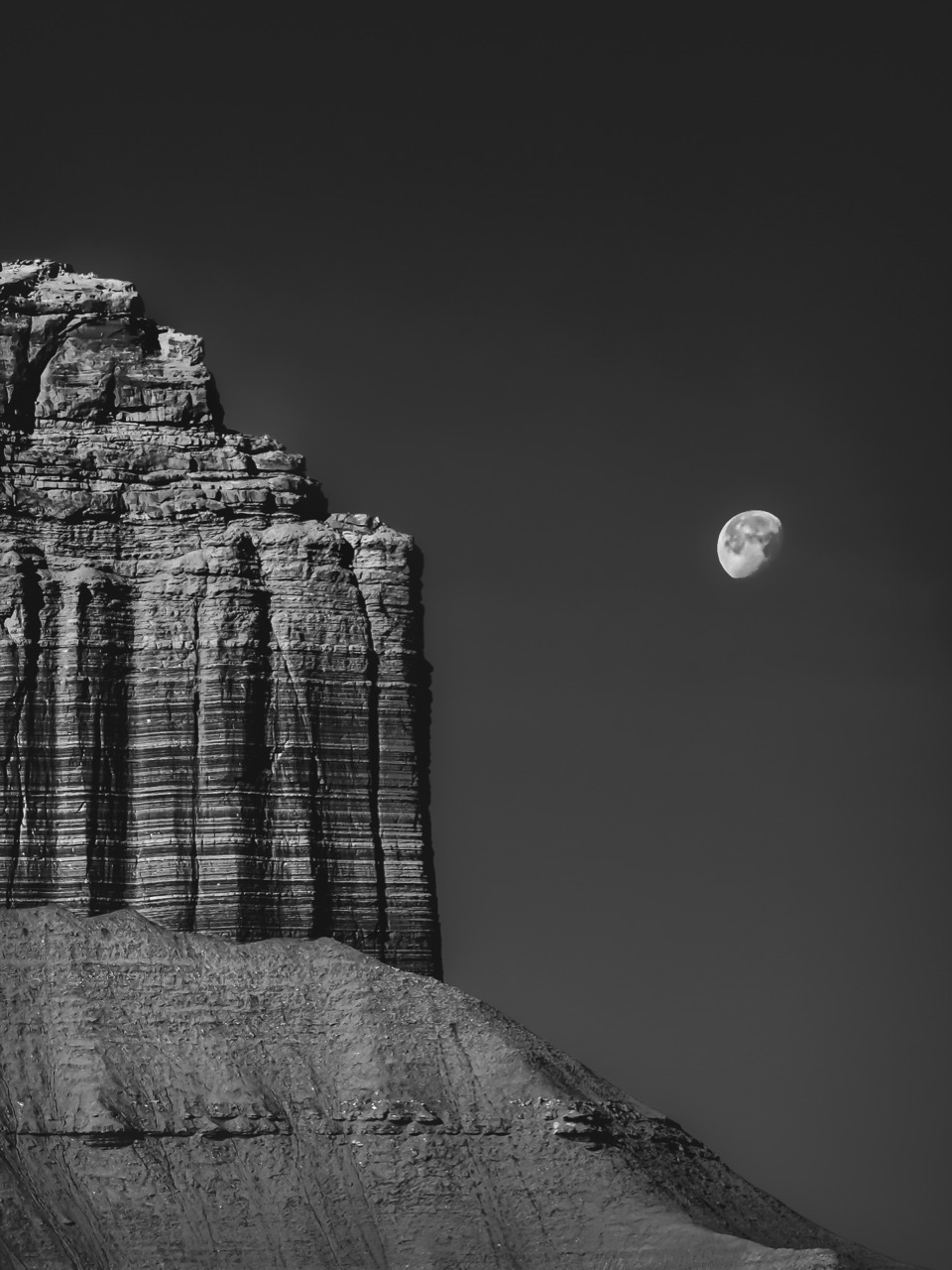
The phone gives you three or four lenses and most entrants use one. Wide is for when the foreground is the subject; keep verticals away from the edges. The main camera is the honest one, since what you saw is what the frame holds. Two and three times compress distance, stack ridges into each other, and lift the moon or the sun into scale. Stewart Manning's second-place The Watchman was made at a 200mm equivalent: the kind of reach that turns a distant formation into the subject instead of a detail in the corner.
Shot details
- iPhone
- iPhone 17 Pro Max
- Lens
- 16.89mm (200mm equiv), f/2.8
- Mode
- Photo, 1/640s, ISO 40
Night, water and long exposures
Long exposures are where the phone quietly exceeds expectations. Braced against a wall or on a small tripod, Night mode will stretch to several seconds and clean up noise as it goes; the same frame hand-held comes back muddy. For water, a few seconds is usually enough to smooth a river into tone; for traffic or stars, use a long-exposure app and count the seconds yourself. Two rules survive every camera: the phone must not move, and nothing in the frame should be brighter than you want it.


Editing, and honesty
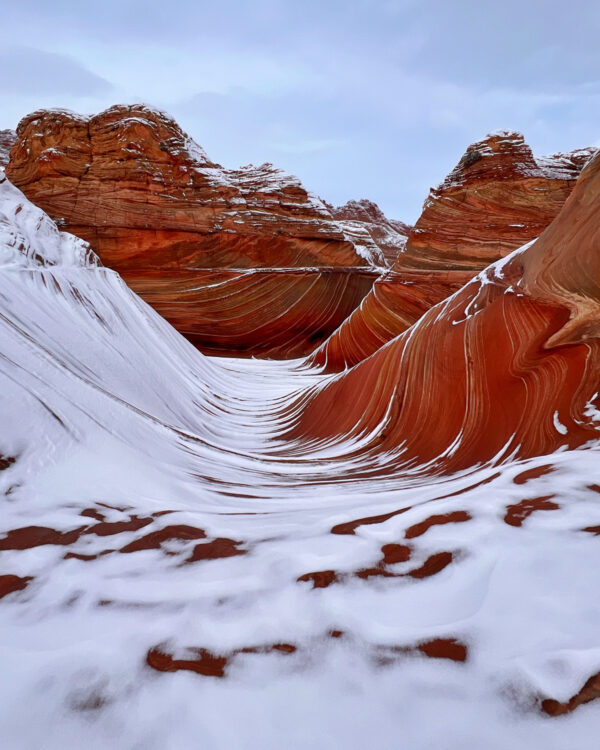
The archive is full of landscapes that were edited hard and landscapes that were barely touched, and both can win. What sinks an entry is the tell: halos along a ridge, grass that has gone acid green, a sky that is a different photograph from the ground. The judges have looked at a great many skies. Work the global adjustments first, in the order of exposure, contrast and warmth; keep local work small; and look at the frame at full size before you enter it. Then read the current guidelines, because what may be done to an image has been adjusted over the years and the current version is the one that applies.
How to enter a landscape
Landscapes are entered through the normal submission process, one photograph per entry slot, in the Landscape category. Read the current requirements before you buy a bundle, since file type, resolution and series rules change between cycles, then upload at full size. A single frame chosen well beats six variations of the same view; the judges are looking for the photograph, not for proof that you were there.
Enter your landscape
Entries are judged on the photograph, not the gear. Read the guidelines first, then choose the one frame that holds the place.
Entry guidelines

