
Category Guides
Portrait: A Category Guide
What separates a portrait that places in IPPAWARDS: light that describes a face, a distance chosen on purpose, and a frame that says who the person is.

Portrait is the category where technique is least hidden. A face has no landscape to hide behind: the light is either doing something or it is not, and the moment is either honest or it is posed. What the judges see most often is not technical failure. It is a photograph taken before the photographer decided what the portrait was about.
What the category rewards
The winning portraits in the archive share three qualities: a subject who is present, light that describes the face rather than flattening it, and a frame that says something about the person circumstance. A tight crop on a beautiful face is a good photograph. A frame that explains why that face matters is an award-winning one.
Light on a face
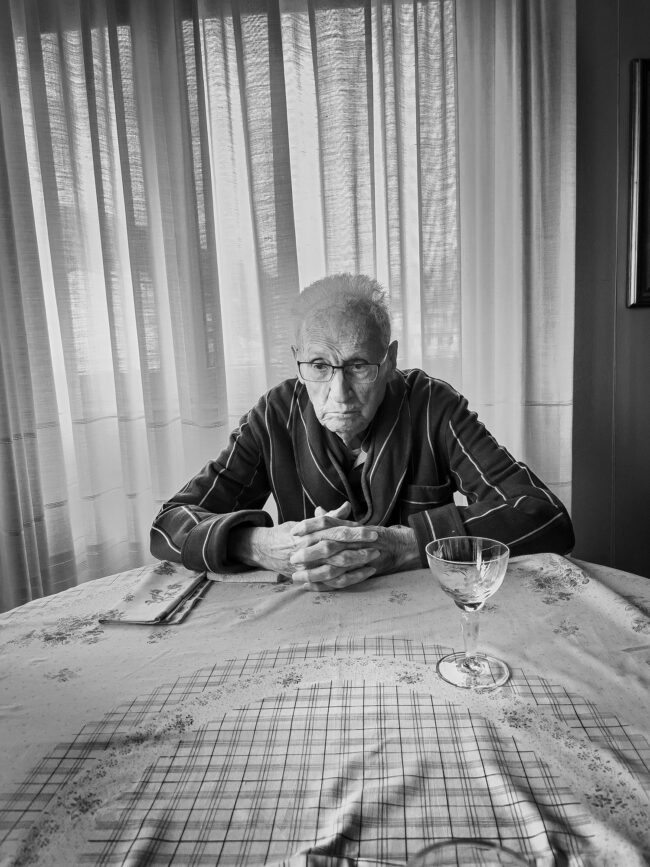
Window light and open shade are the two most reliable sources available to anyone with a phone. Both wrap around a face and leave the eyes alive. Direct midday sun is the hardest light to use well: it hollows the eyes and draws a hard line under the nose. If you have no choice, turn the subject so the light rakes across the cheek instead of hitting it flat.
Distance and focal length
The focal length you choose changes the face, not just the framing. Around 24 to 26mm the nose grows and the room comes into the picture; this is the environmental portrait, and it works when the place matters. Around 48 to 52mm the proportions settle into something close to how people see each other. At 77mm and beyond the background compresses and the face flattens into calm. The three frames below were made at 24mm, 52mm and 120mm equivalent, according to the camera data supplied with each entry. The 2026 winners and honourable mentions were made at every one of those distances, which is the point: the lens is a decision about what the portrait is saying.


The frame around a face
Give the subject somewhere to look and something to do with their hands. A portrait made while someone is mid-task usually beats one made while they wait for you to finish. Leave space in the direction of the gaze, and crop at a joint only when you mean to.
Consent and captioning
Every portrait entered must be yours to enter. Ask before you photograph, and ask again before you enter the frame in a competition. When the subject is a child, permission has to come from a parent or guardian. Caption your entry with what you know to be true: the place, the moment and anything the viewer could not guess.
Before you press the shutter
- Is there light in both eyes?
- Does the background compete with the face?
- Are the hands doing something, or waiting?
- Have you chosen the distance on purpose?
- Would the subject recognise themselves in this frame?
- Do you have permission to enter it?
How to enter a portrait
Portraits are entered through the normal submission process, one photograph per entry slot, in the Portrait category. Read the current requirements before you buy a bundle: file type, resolution and the number of images per series all change between cycles.
Enter your portrait
Entries are judged on the photograph, not the gear. Read the guidelines first, then choose the one frame that says the most.
Read the entry guidelines

